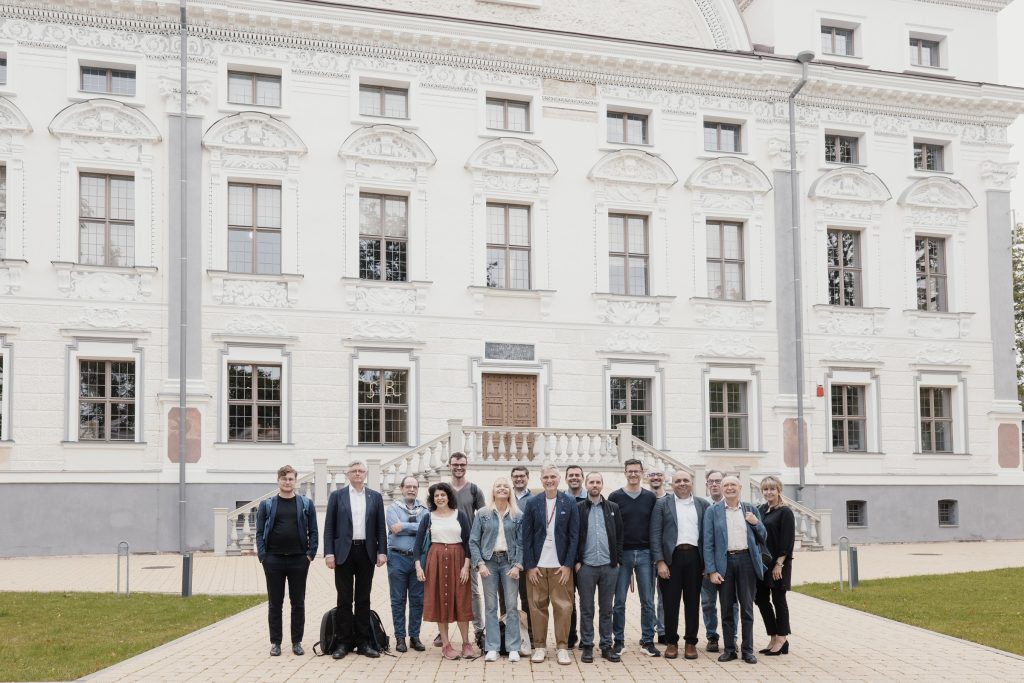
Maria Ines Mudrovcic participates in the 1st Vilnius Convention in Historical Theory
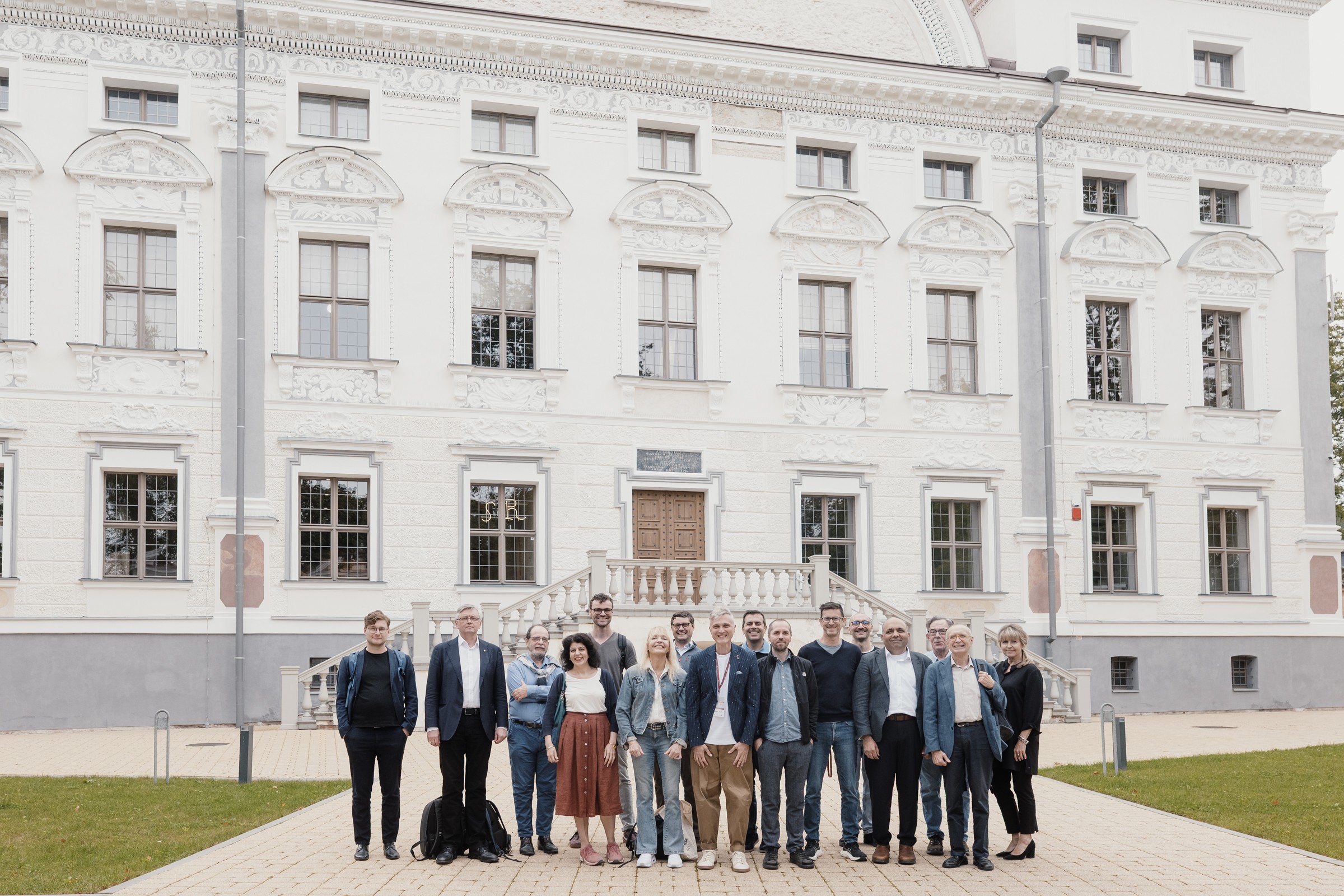

The researcher from the Latin American Network for Theory and History of Historiography, Maria Ines Mudrovcic, participated in the 1st Vilnius Convention in Historical Theory, held from August 29 to 31, 2025 in Vilnius, Lithuania. The meeting brought together 12 researchers to discuss why contemporary societies felt that “something had gone awry in the clockworks of time,” an idea evoked by the writer Georgi Gospodinov —“I felt something had gone awry in the clockworks of time”—when explaining his novel Time Shelter (2022), winner of the International Booker Prize 2023.
The discussions began with the observation that, unlike the nostalgic refuge in a “safe and happy” past, idealized images of the past revealed colonial legacies in the West and the Global South, as well as “ghosts of communism” and Eastern forms of imperialism: pasts that did not appear “safe and happy.” Looking to the future offered nothing more encouraging: ecological and socio-environmental collapse and technological dystopias dominated Western perceptions, while in Central and Eastern Europe, the greatest challenge was the “return of the past,” physically felt in Prague, Warsaw, Tallinn, Riga, and Vilnius, amid the transformation of the Russian Federation into a totalitarian state, the war against Ukraine, and references to “restoring the empire.” It was noted that while residents of Los Angeles faced deadly fires and Manila was sinking into the ocean, Vilnius was preparing for “Day X.”
Against a backdrop of unstable, unsettling, and dangerous presents, “escaping the present” emerged as an imperative. Yet because pasts and futures seemed equally troubled, there was no desirable historical trajectory or plausible conception of history capable of offering temporal guidance. The participants discussed questions such as whether to accommodate presentism or resist it (Hartog, 2015); whether to remain with the discomfort; whether to seek “time shelters” in idealized pasts; whether to correct the errors of the past and present by mobilizing history against itself; or whether to acknowledge the “disorientation of the future” and the anticipated leaps of “unprecedented change” toward unfathomable futures. They also asked what societies should do in times without direction and what conception of history could address such compelling yet conflicting imperatives.
The program devoted two days to academic exchanges among researchers from East to West and from South to North, and a third day to cultural activities. The Convention was presented as the first of its kind and planned to be held annually in August/September in Vilnius, with 12 rotating participants taking part in each edition. Maria Ines Mudrovcic was among the twelve researchers who discussed the meeting’s central theme.